
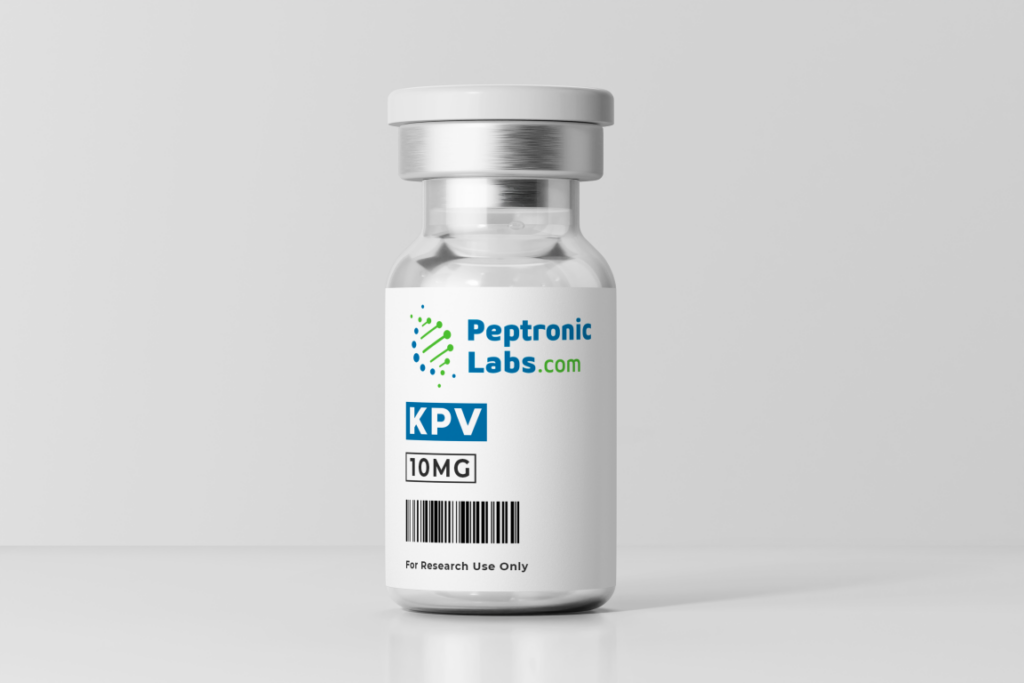
KPV (Lys-Pro-Val) is a potent, naturally occurring tripeptide that has become a major focal point in regenerative and immunological research. As the C-terminal fragment of $\alpha$-melanocyte-stimulating hormone ($\alpha$-MSH), KPV retains the powerful anti-inflammatory and antimicrobial properties of the parent hormone without the associated effects on skin pigmentation.
The Science of KPV
The therapeutic interest in KPV stems from its ability to modulate the body’s inflammatory response at the cellular level. Unlike larger, more complex peptides that rely on specific receptor binding, KPV is a small signaling fragment capable of penetrating cell membranes to influence intracellular pathways directly.
- NF-κB Inhibition: One of the most documented effects of KPV is its ability to suppress the activation of Nuclear Factor-kappa B (NF-κB). NF-κB is a central regulator of inflammatory gene expression; by inhibiting this pathway, KPV can effectively downregulate the production of pro-inflammatory cytokines such as TNF-$\alpha$, IL-1$\beta$, and IL-6.
- PepT1-Mediated Uptake: Research highlights that KPV utilizes the PepT1 transporter, which is highly expressed in the intestinal tract. This makes it a primary candidate for studies focused on gastrointestinal inflammation, such as Inflammatory Bowel Disease (IBD) and epithelial barrier dysfunction.
- Antimicrobial Influence: Studies have shown that KPV exhibits direct antimicrobial activity against common pathogens, including Staphylococcus aureus and Candida albicans. It does this while simultaneously supporting the host’s immune function, distinguishing it from conventional anti-inflammatory drugs that often suppress the immune system.
Technical Specifications
| Technical Specifications: KPV | |
|---|---|
| Full Name | Lysine-Proline-Valine (Lys-Pro-Val) |
| CAS Number | 67727-97-3 |
| Sequence | Lys-Pro-Val |
| Molecular Formula | C16H30N4O4 |
| Molecular Weight | ~342.4 g/mol |
Research Considerations
- Administration Routes: KPV is highly versatile in research settings. It has been documented in studies utilizing oral, topical, and systemic (injection) administration. Because of its small molecular weight, it demonstrates excellent stability and bioavailability compared to longer, more fragile peptide chains. Advanced Mobile IV+ 1
- Wound Healing: Beyond gut health, topical KPV is extensively researched for cutaneous wound healing. By modulating the inflammatory response at the site of a wound, it helps facilitate faster epithelial repair and prevents excessive scarring in experimental models. Innerbody Research
- Safety Profile: Because KPV is an endogenous (naturally occurring) fragment of $\alpha$-MSH, preclinical studies often report a favorable safety profile with minimal systemic hormonal interference, which is a major advantage for localized therapeutic research. Peptide Biologix
Research Transparency:Oral vs Injectable KPV Dosing
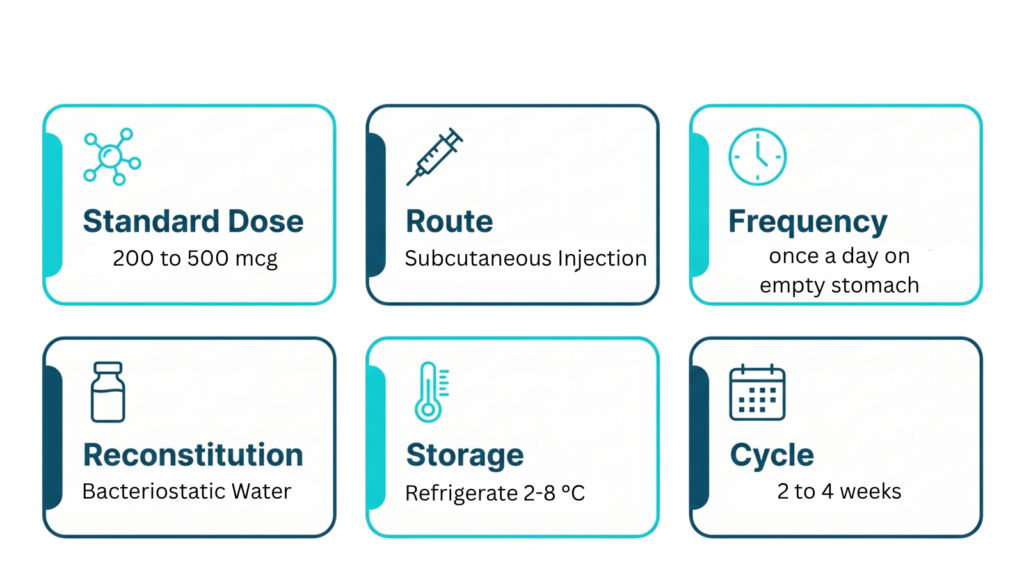
Oral and subcutaneous KPV use the same daily milligram range. The difference is destination, not dose size.
Factor Oral KPV Subcutaneous KPV Best target Gut, IBD, colitis Systemic, joints, widespread skin Absorption PepT1 transporter in gut lining Direct into circulation Self-targeting Yes, PepT1 rises with inflammation No Typical onset 2-4 weeks 1-2 weeks Timing Empty stomach, 30 min before food Anytime, rotate sites Daily dose 200-500 mcg 200-500 mcg
For maximum efficiency please feel free to use our free Peptide Calculator
Critical Factors for Researchers
When documenting KPV protocols on your site, you should include the following variables that influence dosage selection:
- Administration Route:
- Topical: When studying dermal repair, concentration (percentage) is the standard metric. Researchers typically create solutions where KPV is dissolved in a carrier vehicle (like saline or a cream base).
- Systemic (Injection): In preclinical animal studies, dosage is often calculated by body weight (mg/kg).
- Study Objective: If the goal is to observe the anti-inflammatory impact on a localized injury (e.g., a skin lesion), researchers use lower concentrations to avoid oversaturating the local receptors. If the goal is systemic cytokine modulation (e.g., in IBD models), the dosage may be adjusted based on the required plasma concentration.
- Frequency: KPV has a relatively short half-life compared to larger proteins. In many research models, the compound is administered more frequently (e.g., 1–2 times daily) rather than in a large, single “loading” dose, to maintain consistent levels for the study duration.
- Purity & Contaminants: As KPV is a tripeptide, its activity is highly sensitive to synthesis quality. High-purity peptides (>98% purity, validated by HPLC and MS) are required to ensure the dosage outcomes are statistically significant. Contaminants (like endotoxins) can trigger their own inflammatory response, effectively nullifying the research data.
How to Reconstitute Peptides Step by Step
- Clean the rubber stopper of your peptide vial with an alcohol swab and let it dry.
- Using a syringe, draw the calculated amount of bacteriostatic water.
- Insert the needle through the stopper and inject the water slowly down the inside wall of the vial. Do not aim directly at the powder.
- Gently swirl the vial until the powder dissolves completely. Never shake it, as this can degrade the peptide.
- Store the reconstituted vial in your refrigerator (2-8 °C). Use within 3 to 4 weeks.
Frequently Asked Questions: KPV (Lys-Pro-Val)
Q: How does KPV differ from the parent hormone α-MSH?
A: α-MSH (alpha-melanocyte-stimulating hormone) is a larger hormone responsible for several systemic processes, including the regulation of skin pigmentation. KPV is a small tripeptide fragment (the C-terminal end) of α-MSH. By isolating this fragment, researchers can isolate the powerful anti-inflammatory and antimicrobial properties while bypassing the unwanted skin-darkening (melanogenic) effects associated with the full hormone.
Q: Why is KPV considered a primary candidate for gastrointestinal research?
A: KPV exhibits a specific affinity for the PepT1 transporter, which is highly expressed in intestinal epithelial cells. This allows for efficient uptake and localized action within the gut lining. Because of this, it is frequently studied in experimental models of inflammatory bowel disease (IBD) and epithelial barrier dysfunction, where targeted anti-inflammatory action is required without systemic immunosuppression.
Q: Can KPV be “stacked” with other peptides in a research protocol?
A: Yes. In regenerative research, KPV is often studied in combination with other peptides like BPC-157. The rationale for this synergy is multi-modal:
- BPC-157 supports tissue repair, angiogenesis (new blood vessel formation), and ligament healing.
- KPV works to dampen localized inflammation and protect the mucosal lining from oxidative stress.Researchers often utilize this combination to study the acceleration of healing in tissues that are difficult to repair, such as those in the digestive tract.
Q: What is the primary difference between systemic and topical research applications?
A: The choice of administration typically depends on the study focus:
- Systemic (Injection): Used when the research objective is to observe broader anti-inflammatory effects, such as systemic cytokine modulation or reduction of widespread inflammation.
- Topical: Preferred when the research focus is localized (e.g., wound healing, skin inflammation, or dermatological research). Topical application allows for a direct concentration gradient at the specific site of study, often minimizing the amount of peptide required.
Q: How should KPV be stored to ensure research integrity?
A: KPV is a small, stable molecule, but like all peptides, it is susceptible to degradation if mishandled.
- Lyophilized Powder: Store in a freezer at -20°C for long-term stability.
- Reconstituted Solution: Once reconstituted with bacteriostatic water, it must be kept in a refrigerated environment (2°C to 8°C).
- Light Sensitivity: It should always be kept in an amber vial or a light-protected container, as exposure to UV light can compromise the peptide bond integrity.
Best Pure Research is an independent resource dedicated to providing technical specifications and peer-reviewed research summaries for experimental peptides and chemical compounds. Our library is intended to support professionals in the scientific community by centralizing data on pharmacology, chemical structure, and research protocols.
- PubChem: Chemical Database
- PubMed: Scientific Literature
- WHO: International Research Standards
- Research Ethics & Safety Guidelines
All content provided is for informational and laboratory research purposes only. These products are not intended for human consumption or medical use.
Our Recommended UK Supplier
KPV is available from Peptronic Labs UK-based, ≥99.0% purity verified by HPLC, Royal Mail Tracked 24. View KPV