
Research Overview
Unlike traditional therapies that target a single pathway, BPC-157 is studied for its ability to modulate multiple biological systems simultaneously. Its “body protection” moniker refers to its influence on:
- Tendon-to-Bone Healing: Research consistently shows that BPC-157 accelerates the healing process in tendons and ligaments, specifically at the insertion points where tissues are notoriously difficult to repair.
- Angiogenesis: It promotes the formation of new blood vessels, which is critical for restoring blood flow to damaged tissues.
- Gastrointestinal Health: Originally studied for its potential in treating gastric ulcers and inflammatory bowel disease, it exhibits strong cytoprotective effects on the intestinal lining.
- Anti-Inflammatory Modulation: It acts by downregulating inflammatory cytokines and protecting cells from oxidative stress.
| Technical Specifications: BPC-157 | |
|---|---|
| Peptide Name | BPC-157 (Body Protection Compound) |
| CAS Number | 137525-51-0 |
| Amino Acid Sequence | Gly-Glu-Pro-Pro-Pro-Gly-Lys-Pro-Ala-Asp-Asp-Ala-Gly-Leu-Val |
| Molecular Formula | C62H98N16O22 |
| Molecular Weight | ~1419.5 g/mol |
Advanced Mechanistic Profile
VEGF (Vascular Endothelial Growth Factor) Modulation: A cornerstone of BPC-157 research is its interaction with VEGF. Studies have shown that BPC-157 upregulates the expression of VEGF receptors, which is the primary driver of angiogenesis (the formation of new blood vessels). By promoting neovascularization, the peptide ensures that damaged tissues receive the oxygen and nutrients required to accelerate the repair of ligaments, tendons, and mucosal linings.
Nitric Oxide (NO) System Regulation: BPC-157 has been observed to modulate the nitric oxide system. By managing NO production, it can have a protective effect on endothelial health. This is a crucial area of study for researchers looking at how peptides can protect the cardiovascular system and improve blood flow to injured tissues.
Gut-Brain Axis & Cytoprotection: BPC-157 is uniquely stable in gastric juice, which is why it is studied heavily for GI tract repair. Beyond simple ulcer healing, it is researched for its influence on the “gut-brain axis,” specifically its ability to maintain the integrity of the mucosal barrier and protect the enteric nervous system from toxins and oxidative stress.
Pharmacological Mechanisms Table
| Biological System | Primary Research Effect |
|---|---|
| Angiogenesis | Upregulation of VEGF; promotes vessel formation. |
| Collagen Synthesis | Stimulates fibroblast proliferation and collagen organization. |
| Cytoprotection | Protects endothelial lining from toxins and oxidative stress. |
| Inflammatory Response | Modulates proinflammatory cytokines (e.g., TNF-α). |
BPC 157 dosage guide
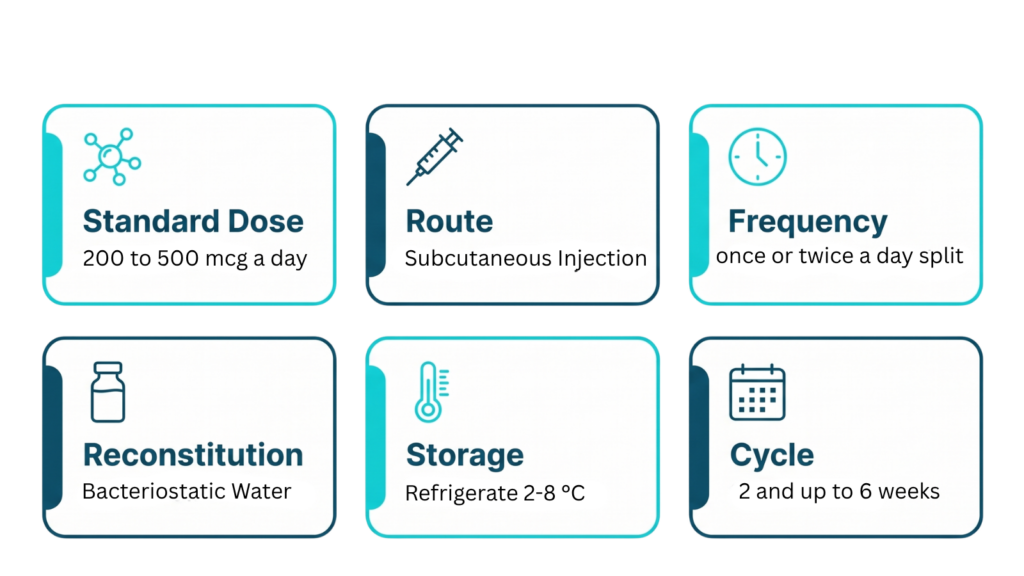
- Oral dosage: Typically ranges from 200 mcg to 500 mcg per day.
- Injectable dosage: Often ranges from 250 mcg to 500 mcg per day, usually administered subcutaneously near the injury site.
- Cycle duration: Usually 2 to 4 weeks, but some protocols extend up to 6 weeks depending on the condition being treated.
For maximum efficiency please feel free to use our free Peptide Calculator
How to Reconstitute Peptides Step by Step
- Clean the rubber stopper of your peptide vial with an alcohol swab and let it dry.
- Using a syringe, draw the calculated amount of bacteriostatic water.
- Insert the needle through the stopper and inject the water slowly down the inside wall of the vial. Do not aim directly at the powder.
- Gently swirl the vial until the powder dissolves completely. Never shake it, as this can degrade the peptide.
- Store the reconstituted vial in your refrigerator (2-8 °C). Use within 3 to 4 weeks.
Frequently Asked Quetstions
Q: What is the primary focus of BPC-157 research?
A is bpc157 researched for its potent ability to accelerate the healing of tendons, ligaments, and gastrointestinal tissue, primarily through the stimulation of angiogenesis and anti-inflammatory modulation.
Q: Why is BPC-157 researched for both systemic and oral applications?
A: Due to its stability in the gastric environment, BPC-157 is uniquely suited for GI-focused research (oral) while systemic injection models are used for accelerated musculoskeletal repair.
Q: How does BPC-157 differ from other regenerative peptides?
A: BPC-157 is recognized for its multi-modal mechanism, interacting with growth factor pathways like VEGF to promote blood vessel formation and tissue regeneration, often working in tandem with other repair-focused compounds.
Q: What is the standard storage protocol?
A: Keep lyophilized powder at -20°C. Once reconstituted, store at 2°C–8°C in a dark environment. Avoid physical agitation (shaking) to maintain structural integrity.
Sources
| Resource | Description | Link |
|---|---|---|
| PubMed | Peer-reviewed studies on BPC-157 tissue repair and angiogenesis. | View Studies |
| PubChem | Molecular structure and chemical property data for the pentadecapeptide. | View Data |
| Wikipedia | General scientific context and peptide history. | View Wiki |
Our Recommended UK Supplier
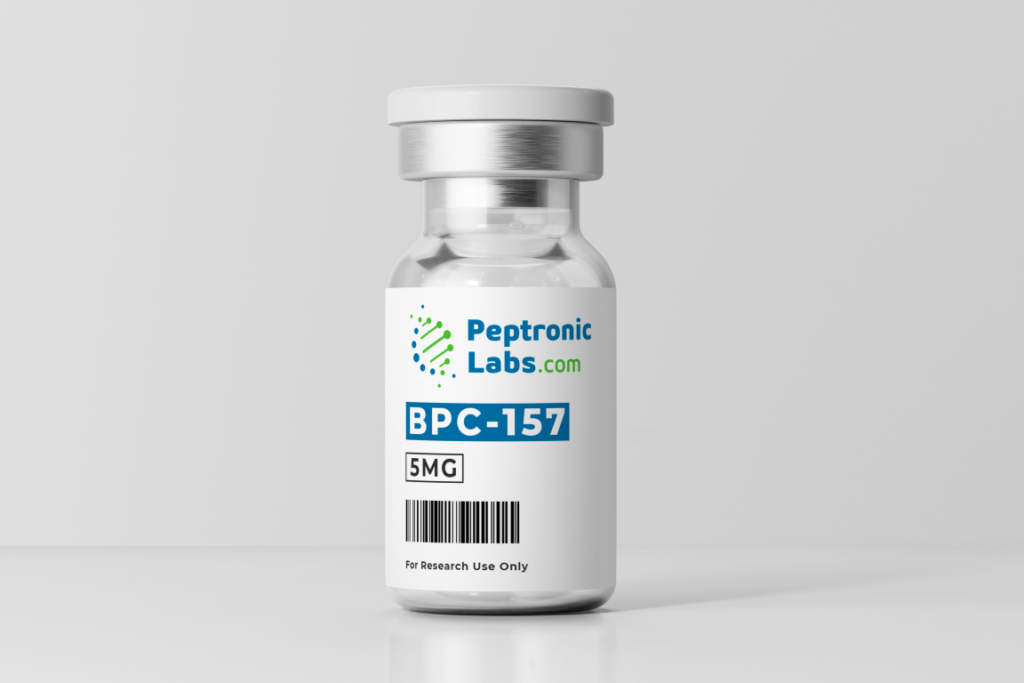
BPC-157 is available from Peptronic Labs UK-based, ≥99.0% purity verified by HPLC, Royal Mail Tracked 24. View BPC-157