
GHK-Cu: The Regenerative Master Peptide
GHK (glycyl-L-histidyl-L-lysine) is a naturally occurring tripeptide present in human plasma. It has a high affinity for copper ions and spontaneously forms a complex known as GHK-Cu. Since its discovery by Dr. Loren Pickart in 1973, it has become one of the most extensively researched molecules in dermatology, wound healing, and anti-aging studies.
Mechanism of Action: The Gene Modulator
What separates GHK-Cu from other peptides is its ability to reset human gene expression toward a healthier, more youthful state. Research indicates that GHK-Cu can reset a significant portion of human genes (studies suggest over 4,000) back to their healthy, “youthful” profiles.
- Collagen & Elastin Induction: GHK-Cu stimulates the fibroblasts in the skin to produce collagen and elastin. It also stimulates the breakdown of damaged, cross-linked collagen that accumulates in scar tissue.
- Wound Healing: It is a potent wound-healing agent. By modulating the inflammatory response and encouraging the migration of endothelial cells to the wound site, it accelerates tissue repair.
- Anti-Inflammatory/Anti-Oxidant: It serves as a powerful scavenger of reactive oxygen species (ROS) and downregulates pro-inflammatory cytokines like TGF-$\beta$1.
- Stem Cell Regulation: Recent research highlights its role in the survival and proliferation of skin stem cells, which is critical for tissue regeneration and repair.
| Technical Data: GHK-Cu | |
|---|---|
| Peptide Name | Copper Tripeptide-1 (GHK-Cu) |
| CAS Number | 49557-75-7 |
| Amino Acid Sequence | Gly-His-Lys-Cu |
| Molecular Formula | C14H22CuN6O4 |
| Molecular Weight | ~403.9 g/mol |
The Fundamental Distinction
Elemental Copper (Cu2+): In its ionic form, copper is a heavy metal. While essential for enzymes, free copper ions are highly reactive and, in excess, can induce oxidative stress or “pro-oxidant” activity (damaging cellular components through free radical production).: In its ionic form, copper is a heavy metal. While essential for enzymes, free copper ions are highly reactive and, in excess, can induce oxidative stress or “pro-oxidant” activity (damaging cellular components through free radical production).- GHK-Cu (The Complex): ghkcu copper peptide benefits The GHK tripeptide (Glycyl-L-Histidyl-L-Lysine) acts as a highly specialized transport vehicle. It binds the copper ion, effectively “caging” it. This removes the pro-oxidant danger of free copper and transforms it into a signaling molecule that tells the cell to repair and regenerate.
Why GHK-Cu is Unique
Researchers focus on GHK-Cu because the GHK peptide component does the heavy lifting:
- Chaperone Effect: GHK protects the copper ion from reacting with other molecules in the blood, ensuring it reaches the destination (like a fibroblast in the skin) without causing damage along the way.
- Gene Resetting: This is the most crucial difference. GHK-Cu enters the cell and interacts with chromatin, effectively “resetting” gene expression. It switches off genes associated with inflammation and switches on genes associated with tissue repair. Plain copper cannot do this; it lacks the peptide “key” required to open these genetic pathways.
- Targeted Delivery: GHK has a specific affinity for cell surface receptors. It essentially acts as a “homing beacon” that delivers the copper payload directly to tissues that need repair (such as damaged tendons or aging skin).
FAQ
While copper is a necessary mineral for human health, GHK-Cu is a bio-identical peptide complex. The GHK tripeptide acts as a ‘smart delivery system,’ transforming copper from a raw nutrient into a powerful signaling molecule. In a research context, GHK-Cu is utilized not for copper supplementation, but for its unique ability to modulate gene expression, stimulate collagen synthesis, and accelerate cellular repair—functions that elemental copper cannot perform independently.
Skin Regeneration Research
Q: How do peptides like GHK-Cu influence skin research?
A: GHK-Cu is studied as a gene modulator. Research indicates that it resets gene expression toward a healthier, more youthful profile. Specifically, it stimulates fibroblasts to increase collagen and elastin production while accelerating the breakdown of damaged, cross-linked collagen that often accumulates in scar tissue or aged skin.
Q: Why is GHK-Cu preferred over raw copper in skin studies?
A: While copper is an essential mineral, raw copper ions can be pro-oxidant and potentially damaging to cells if not chelated properly. GHK-Cu acts as a biological “delivery system.” The GHK tripeptide “cages” the copper ion, ensuring it reaches the target cell (such as a fibroblast) safely without triggering free-radical damage.
Q: Does research show that peptides can improve skin thickness?
A: Yes. Clinical studies on GHK-Cu have demonstrated that it can increase skin density and thickness by promoting the synthesis of glycosaminoglycans (GAGs) and collagen, which are essential for maintaining skin structure and hydration.
Hair Follicle Research
Q: How do peptides interact with hair follicles?
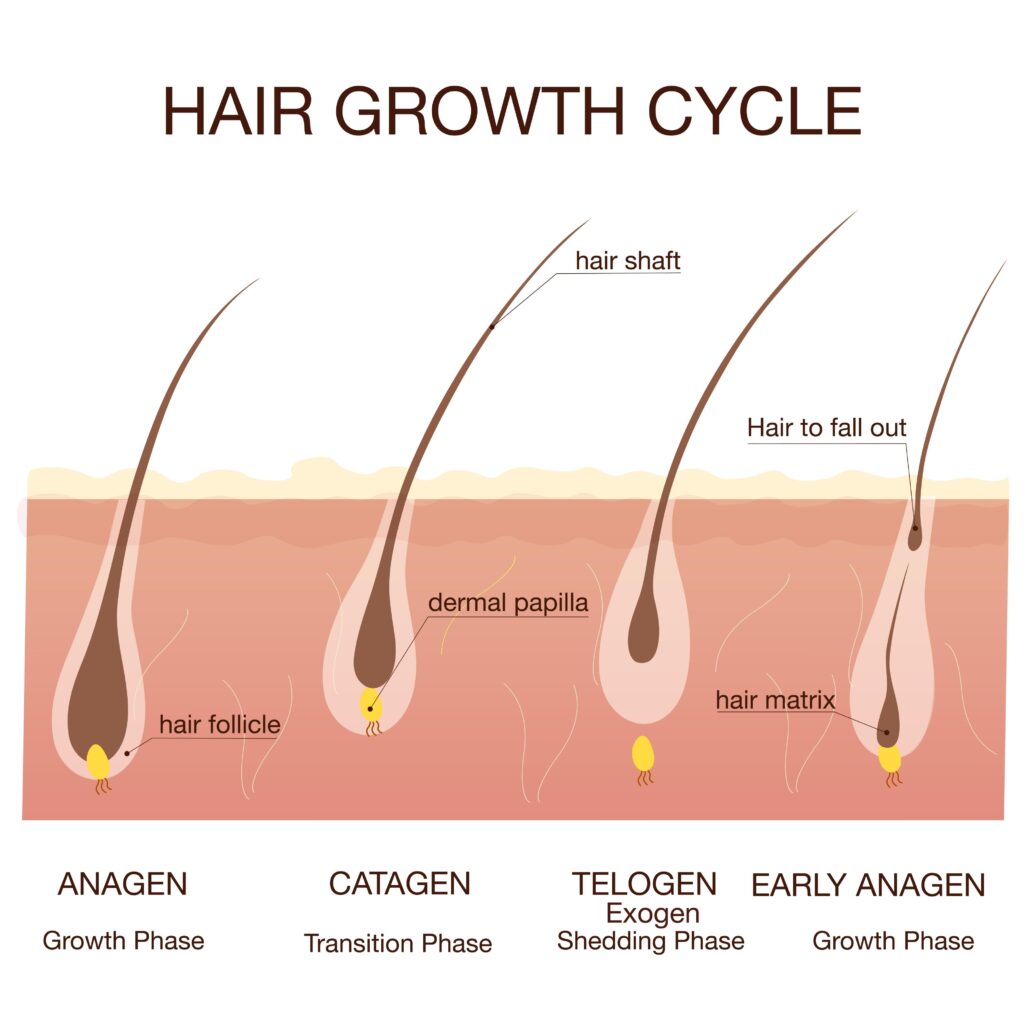
A: Peptides studied in hair research generally focus on the dermal papilla cells at the base of the hair follicle. The goal of this research is often to reverse the miniaturization process (where follicles shrink and produce finer, thinner hair) by providing the necessary signaling molecules to keep the follicle in the “anagen” (growth) phase for longer.
Q: What is the theory behind peptide-based hair research?
A: Research often focuses on two key areas:
- Vascularization: Promoting angiogenesis (new blood vessel formation) near the follicle to increase nutrient and oxygen delivery.
- Cellular Proliferation: Extending the growth cycle of the follicle by preventing premature entry into the “catagen” (regression) phase.
Q: Can these peptides be used systemically for hair?
A: Most current research in the dermatological and hair-loss space favors topical application. This allows the researchers to deliver the signaling molecules directly to the scalp, minimizing systemic interaction and focusing the mechanism of action specifically on the hair follicles of the scal
Q: Can different peptides be combined in one research protocol?
A: Researchers often look at “stacking” peptides to study synergistic effects (e.g., combining GHK-Cu for skin structure with other peptides for collagen support). However, this must be done carefully to ensure the pH of the solution remains stable, as some peptides are sensitive to the acidity or alkalinity of other compounds.
Research Applications
Fibroblast Proliferation: Studying the peptide’s ability to stimulate collagen and elastin synthesis in skin cell models. Supporting literature: Collagen synthesis and fibroblast activity PubMed
Wound Healing: Investigating the acceleration of tissue repair and anti-inflammatory properties in cellular research. Supporting literature: GHK-Cu and wound repair PubMed
Neuropeptide Signaling: Examining the potential influence on neuroprotective mechanisms. Supporting literature: Copper peptides and neuroprotection PubMed
Antioxidant Activity: Researching the suppression of oxidative stress markers in laboratory-grown tissue cultures. Supporting literature: Oxidative stress modulation PubMed
GHK-cu Dosage Guide
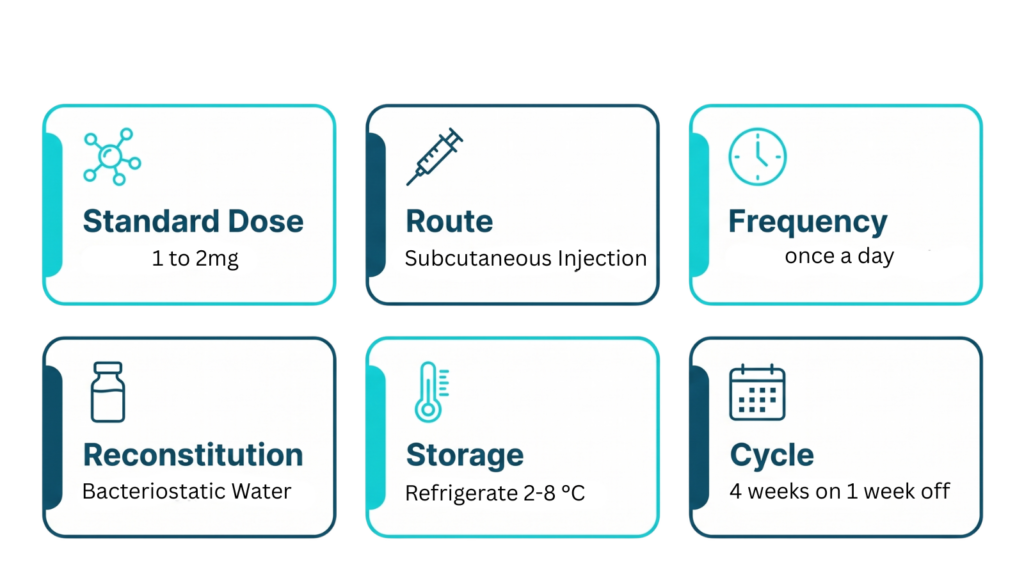
For maximum efficiency please feel free to use our free Peptide Calculator
How to Reconstitute Peptides Step by Step
1.Clean the rubber stopper of your peptide vial with an alcohol swab and let it dry.
2.Using a syringe, draw the calculated amount of bacteriostatic water.
3.Insert the needle through the stopper and inject the water slowly down the inside wall of the vial. Do not aim directly at the powder.
4.Gently swirl the vial until the powder dissolves completely. Never shake it, as this can degrade the peptide.
5.Store the reconstituted vial in your refrigerator (2-8 °C). Use within 3 to 4 weeks.
Supporting literature: GHK-Cu genetic pathway modulation PubMed Copper peptide tissue repair PubMed GHK-Cu antioxidant research PubMed
Our Recommended UK Supplier
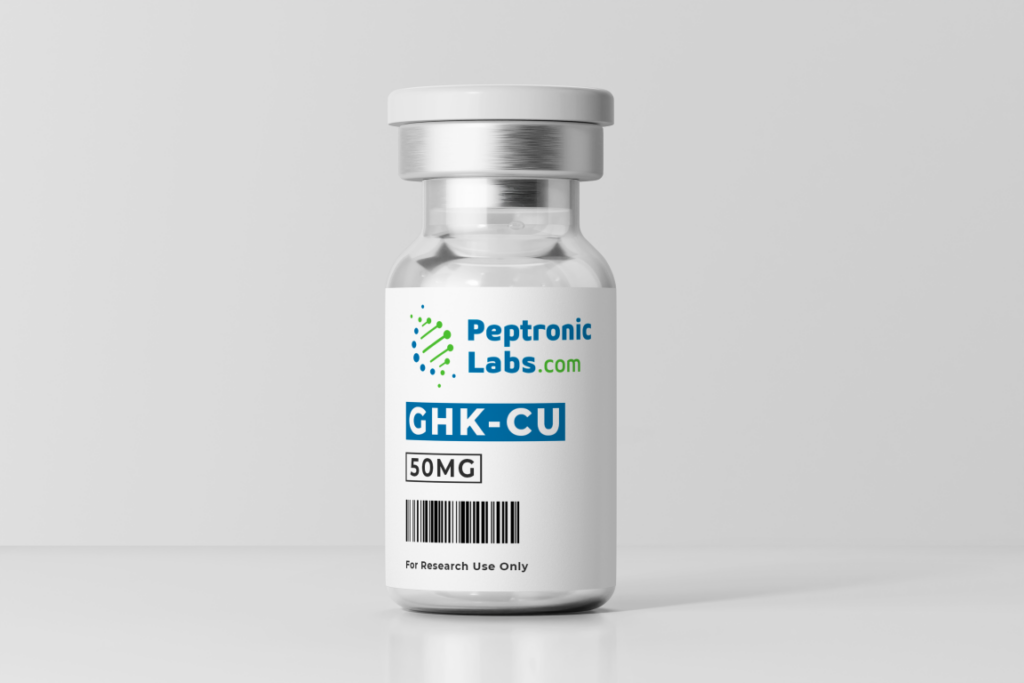
GHK-Cu is available from Peptronic Labs UK-based, ≥99.0% purity verified by HPLC, Royal Mail Tracked 24. View GHK-Cu