
Research Overview: The “Wolverine Stack”
The “Wolverine Stack” is an informal, community-coined term that refers to the concurrent use of BPC-157 (Body Protection Compound-157) and TB-500 (a synthetic version of the naturally occurring protein Thymosin Beta-4). The moniker is derived from the Marvel character Wolverine, referencing the character’s fictional ability to rapidly regenerate tissue and heal from severe injuries.
In online research communities, these two peptides are often discussed together due to their distinct yet complementary mechanisms of action regarding tissue repair and inflammation.
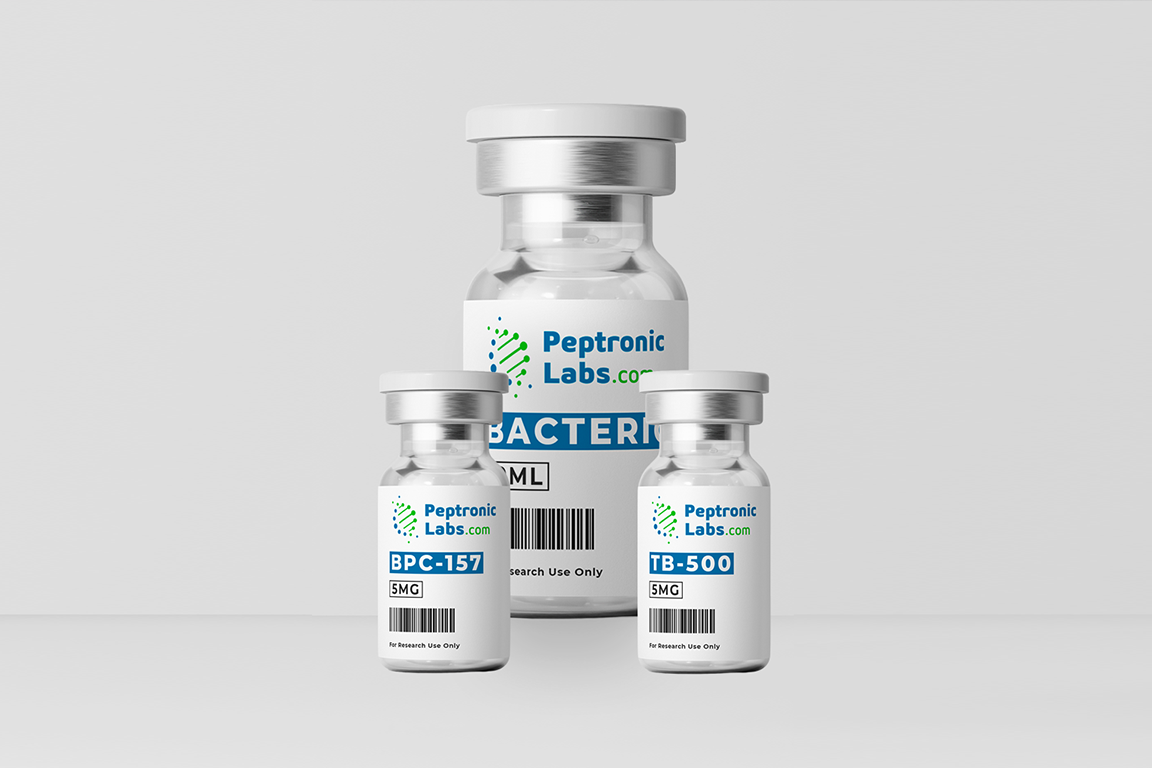
All products for research and supplies can be found on Peptronic Labs
The Components
| Peptide | Mechanism of Action | Primary Areas of Interest |
| BPC-157 | A stable gastric pentadecapeptide; stimulates angiogenesis and modulates inflammatory pathways. | Tendon/ligament repair, gastric health, localized injury healing. |
| TB-500 | A synthetic fraction of the naturally occurring protein Thymosin Beta-4; promotes cell migration and actin polymerization. | Muscle tissue repair, flexibility, systemic inflammatory reduction, recovery. |
| Peptide | Formula | Molecular Weight |
|---|---|---|
| TB-500 | C212H350N56O78S | ~4963.5 g/mol |
| BPC-157 | C62H98N16O22 | ~1419.5 g/mol |
Theoretical Synergy
Proponents of this stack suggest that while both peptides promote healing, they function through slightly different pathways, potentially creating a synergistic effect:
- Complementary Repair: BPC-157 is often researched for its localized, site-specific healing capabilities (such as connective tissue repair), while TB-500 is frequently discussed for its role in systemic healing, cell migration, and anti-inflammatory support.
- Angiogenesis: Both peptides are researched for their roles in angiogenesis (the formation of new blood vessels), which is a critical process in the biological healing of damaged tissue.

Dosages for TB-500 and BPC-157 can vary depending on the purpose of use, individual factors, and guidance from healthcare professionals. Below are general guidelines commonly referenced, but it is crucial to consult with a medical professional before use.
TB-500 Dosage:
- Typical dosage ranges from 2 mg to 5 mg per week.
- Often administered via subcutaneous or intramuscular injection.
- Common protocols involve 2 mg injections twice weekly for 4 to 6 weeks.
- After initial loading phase, maintenance doses may be 2 mg every 2 to 4 weeks.
- Dosage depends on injury severity and individual response.
- Typical dosage ranges from 200 mcg to 500 mcg per day.
- Usually administered via subcutaneous injection near the injury site or intramuscularly.
- Some protocols suggest 250 mcg twice daily for 2 to 4 weeks.
- Oral capsules are also used but bioavailability may be lower.
- Dosage may be adjusted based on injury severity and response.
For maximum efficiency please feel free to use our free Peptide Calculator
How to Reconstitute Peptides Step by Step
- Clean the rubber stopper of your peptide vial with an alcohol swab and let it dry.
- Using a syringe, draw the calculated amount of bacteriostatic water.
- Insert the needle through the stopper and inject the water slowly down the inside wall of the vial. Do not aim directly at the powder.
- Gently swirl the vial until the powder dissolves completely. Never shake it, as this can degrade the peptide.
- Store the reconstituted vial in your refrigerator (2-8°C). Use within 3 to 4 weeks.
Imporant Notes:
- Both peptides are research chemicals and not approved by major medical regulatory agencies for human use.
- Safety, efficacy, and optimal dosages have not been firmly established.
- Always consult a healthcare provider before use.
- Use sterile techniques for injections to reduce risk of infection.
Frequently Asked Questions
Q: What is the “Wolverine” protocol in peptide research?
A: The “Wolverine” protocol is a popular term for stacking BPC-157 and TB-500. This combination is studied in experimental models of severe injury to potentially accelerate the rate of tissue repair.
Q: Why do researchers stack these two specific peptides?
A: BPC-157 acts primarily on localized tissue repair and angiogenesis, while TB-500 facilitates systemic cell migration via actin regulation. Stacking them is hypothesized to provide a dual-action approach to healing.
Q: What are the primary areas of interest for this stack?
A: Research focuses heavily on musculoskeletal recovery, specifically ligaments, tendons, and muscle tissue, as well as broader anti-inflammatory and regenerative studies.
Q: Are there special considerations when stacking these two?
A: Researchers must ensure each peptide is reconstituted correctly using bacteriostatic water and stored at 2°C–8°C. Both compounds are sensitive to light and agitation; vials should be handled gently.
Sources
| Compound | PubMed Research | PubChem Data |
|---|---|---|
| BPC-157 | View Studies | View Data |
| TB-500 | View Studies | View Data |
Our Recommended UK Supplier
The “Wolverine Stack” is an informal, community-coined term that refers to the concurrent use of BPC-157 (Body Protection Compound-157) and TB-500 (a synthetic version of the naturally occurring protein Thymosin Beta-4). The moniker is derived from the Marvel character Wolverine, referencing the character’s fictional ability to rapidly regenerate tissue and heal from severe injuries.
Wolverine Stack is available from Peptronic Labs UK-based, ≥99.0% purity verified by HPLC, Royal Mail Tracked 24. View Wolverine Stack