
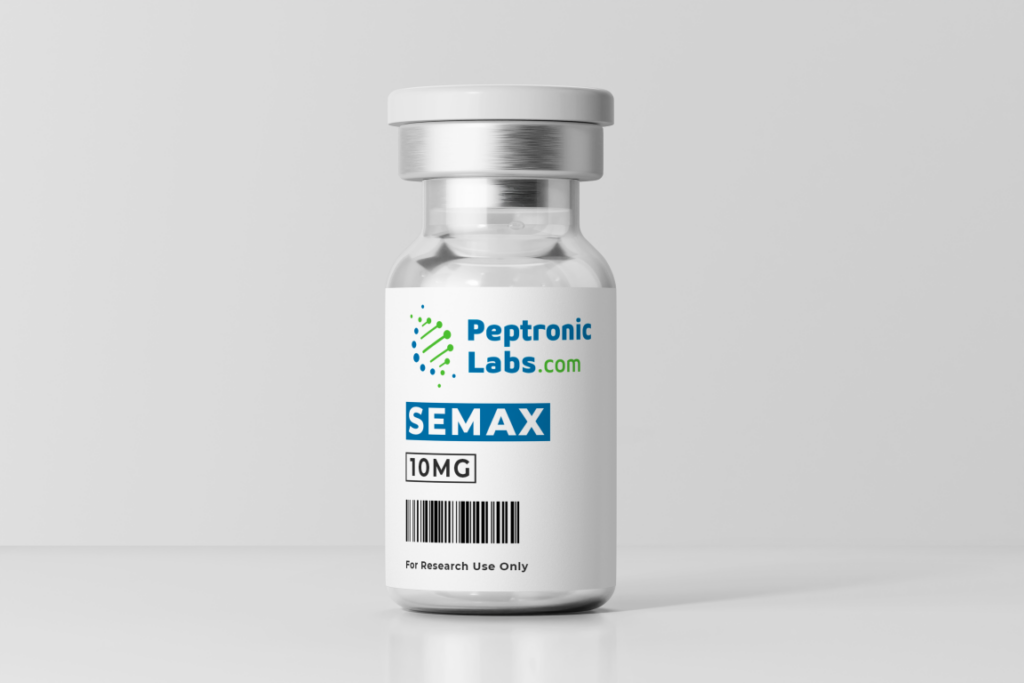
Semax is a synthetic analog of the adrenocorticotropic hormone (ACTH) fragment 4–10. Unlike the full-length ACTH hormone, which has significant effects on cortisol and adrenal function, Semax was specifically engineered to be devoid of hormonal activity. Instead, it acts as a potent nootropic and neuroprotective agent by influencing the brain’s neurotrophic signaling pathways.
Mechanism of Action
Semax’s efficacy in research is largely attributed to its interaction with the central nervous system (CNS):
- BDNF Upregulation: Semax is highly studied for its ability to increase the expression of Brain-Derived Neurotrophic Factor (BDNF) and its receptor (TrkB) in the hippocampus and cortex. BDNF is critical for synaptic plasticity, memory formation, and the survival of neurons.
- Neurotransmitter Modulation: It influences the metabolism of dopamine, serotonin, and norepinephrine. Researchers observe that it helps restore neurotransmitter balance, which contributes to its “clean” focus and mood-stabilizing effects.
- Neuroprotection: Studies have investigated its ability to protect neurons from ischemic damage (such as in stroke models) and oxidative stress by modulating inflammatory responses in the brain.
Key Research Focus
- Cognitive Performance: Investigating improvements in memory consolidation, attention, and learning speed.
- Neurological Recovery: Researching its potential in recovery protocols for traumatic brain injury (TBI) and ischemic stroke.
- Mood Regulation: Evaluating its ability to provide focus and anxiety reduction without the sedative effects of traditional drugs.
Technical Specification Table
| Compound Specifications: Semax | |
|---|---|
| Classification | Synthetic Peptide (ACTH 4-10 analog) |
| Mechanism | BDNF & TrkB upregulation, Monoamine modulation |
| Chemical Formula | C₃₉H₅₁N₉O₁₁S |
| Primary Target | Central Nervous System (CNS) |
| Administration | Intranasal (High BBB permeability) |
| Research Status | Investigational (Nootropic/Neuroprotective) |
What Is Semax?
Semax is a synthetic peptide derived from a portion of adrenocorticotropic hormone (ACTH 4-10), modified with a Pro-Gly-Pro sequence to increase stability and brain penetration. Unlike typical ACTH fragments, Semax does not affect cortisol levels—but instead works as a neuroprotective and nootropic agent.
It was first developed by Russian scientists in the 1980s as a treatment for ischemic stroke, cognitive decline, and brain injury. It’s been approved for clinical use in Russia and Ukraine for decades, but in the U.S., it’s sold for research purposes only.
What sets Semax apart from most peptides or supplements is its ability to target brain-derived neurotrophic factor (BDNF) pathways and modulate dopamine and serotonin, making it a unique cognitive enhancer without stimulant effects.
Key Facts:
→ Class: Nootropic peptide
→ Mechanism: BDNF upregulation, neuroprotection, neurotransmitter modulation
→ Use: Cognitive enhancement, neuroprotection, mental performance under stress
→ Administration: Intranasal (not injectable)
→ Legal status: Not FDA-approved in the U.S.; research use only
“Semax has been shown to modulate neurotransmission, enhance memory, and exert neuroprotective effects by regulating oxidative stress and cerebral circulation.”
— Ashmarin & Kamensky, Neuroscience and Behavioral Physiology
How Semax Works in the Brain
Semax works on multiple neurological pathways, but its primary mechanisms include:
1. BDNF Upregulation
Semax stimulates the production of brain-derived neurotrophic factor (BDNF), a protein that promotes:
→ Neuronal growth and repair
→ Synaptic plasticity (learning and memory)
→ Cognitive resilience under stress or aging
BDNF is considered one of the most important molecules for brain performance, and Semax has been shown to significantly increase its expression in animal models.
2. Dopamine and Serotonin Modulation
Semax modulates dopaminergic and serotonergic signaling, helping to regulate:
→ Motivation
→ Focus and alertness
→ Mood and emotional stability
It may enhance mental clarity without overstimulating the central nervous system—making it appealing to those who don’t tolerate caffeine or amphetamine-based nootropics.
3. Anti-inflammatory and Antioxidant Effects
Semax reduces oxidative stress and neuroinflammation, particularly in ischemic brain conditions or periods of extreme mental fatigue. This is especially helpful during overtraining, burnout, or sleep deprivation.
“Semax’s cognitive effects are mediated by rapid gene expression changes in the hippocampus and cortex, supporting its use for stress and memory impairment.”
— Volkova et al., Molecular Genetics and Genomics
Semax Dosage and Administration
Unlike most peptides that require subcutaneous injection, Semax is taken intranasally, making it easier and more convenient—especially for beginners. But getting the timing and dose right is key to unlocking its full nootropic potential.
Typical Dosing Guidelines
→ Standard daily dose: 300–600 mcg per day
→ Advanced range: Up to 900 mcg per day (split into 2–3 doses)
→ Cycle length: 10–14 days on, followed by at least 7 days off
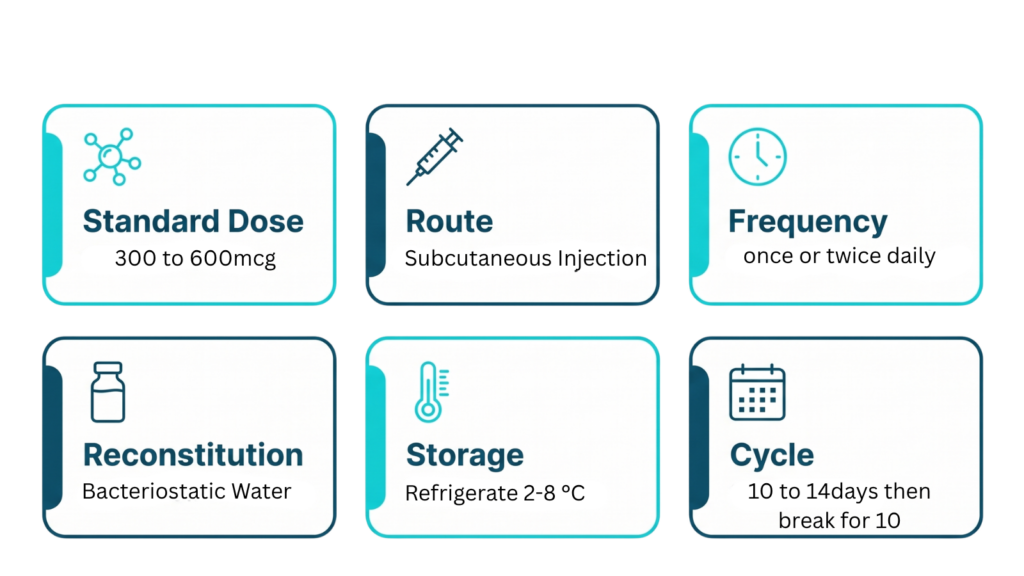
For maximum efficiency please feel free to use our free Peptide Calculator
How to Reconstitute Peptides Step by Step
- Clean the rubber stopper of your peptide vial with an alcohol swab and let it dry.
- Using a syringe, draw the calculated amount of bacteriostatic water.
- Insert the needle through the stopper and inject the water slowly down the inside wall of the vial. Do not aim directly at the powder.
- Gently swirl the vial until the powder dissolves completely. Never shake it, as this can degrade the peptide.
- Store the reconstituted vial in your refrigerator (2-8 °C). Use within 3 to 4 weeks.
Frequently Asked Questions
Q: Is Semax the same as Selank?
A: No. While both are Russian-developed peptides, they have different mechanisms. Selank is an anxiolytic (anxiety-reducing) that modulates GABA. Semax is primarily a nootropic (cognitive-enhancing) that upregulates BDNF. Researchers often stack them for a synergistic effect on mood and cognition.
Q: What is the significance of the 0.1% vs 1% concentration?
A: These concentrations refer to the density of the peptide in the solution. Research studies use different concentrations depending on the required dosage and desired intensity of the neurotrophic effect.
Q: Does it cause a “crash” like stimulants?
A: No. Semax is not a stimulant in the sense of caffeine or amphetamines. It does not force dopamine release; rather, it creates an environment in the brain (via BDNF) that supports sustained focus, which is why it is studied for long-term cognitive maintenance.
Sources
| Resource | Description | Link |
|---|---|---|
| PubMed | Peer-reviewed studies on Semax, BDNF, and neuroregeneration. | View Studies |
| PubChem | Molecular structure and chemical property metadata. | View Data |
| ClinicalTrials.gov | Search for active and historical clinical research records. | View Trials |
Our Recommended UK Supplier
Semax is available from Peptronic Labs UK-based, ≥99.0% purity verified by HPLC, Royal Mail Tracked 24. View Semax