
Glutathione (GSH)
1. Chemical Structure & Composition
Glutathione is a tripeptide composed of three amino acids: L-glutamate, L-cysteine, and glycine.
- The Key Player: The Cysteine residue is the most critical component. It contains an active thiol (-SH) group, which is the site of its chemical activity.
- Reduced vs. Oxidized:
- GSH (Reduced Glutathione): The active form. It carries the free thiol group capable of donating electrons to neutralize free radicals.
- GSSG (Oxidized Glutathione): Two GSH molecules joined by a disulfide bond. This is the “spent” form that the cell must recycle back into GSH.
2. Primary Mechanism of Action: The Redox Cycle
Glutathione operates through a dynamic redox cycle that maintains the health of every cell in your body.
- Neutralization (Direct Antioxidant): When the body encounters Reactive Oxygen Species (ROS) or free radicals, GSH donates an electron from its thiol group to the ROS, effectively neutralizing it. In this process, GSH becomes GSSG.
- Recycling: The enzyme Glutathione Reductase uses NADPH to convert the oxidized GSSG back into the active GSH form.
- The GSH:GSSG Ratio: In a healthy, homeostatic state, the vast majority of cellular glutathione remains in the reduced (GSH) state. A high GSH:GSSG ratio is a primary “fingerprint” of healthy metabolic function; a low ratio is a clinical indicator of high oxidative stress.
Key Biological Actions
| Action | Mechanism |
| Antioxidant Defense | Directly scavenges ROS, free radicals, and lipid peroxides. |
| Detoxification | Conjugates with xenobiotics (toxins, drugs) in the liver via Glutathione S-transferase, making them water-soluble for excretion. |
| Redox Signaling | Regulates protein function through S-glutathionylation, a reversible modification that protects proteins from irreversible oxidation. |
| Immune Modulation | Supports the energy metabolism of T-cells, enabling an optimal immune response to pathogens. |
| Mitochondrial Health | Protects the mitochondrial membrane from oxidative damage, preserving ATP production efficiency. |
Specifications
| Compound Specifications: Glutathione (GSH) | |
|---|---|
| Classification | Tripeptide (Endogenous Antioxidant) |
| Composition | L-Glutamate, L-Cysteine, Glycine |
| Chemical Formula | C₁₀H₁₇N₃O₆S |
| Molecular Weight | 307.32 g/mol |
| Primary Target | Intracellular Redox Homeostasis |
| Key Biological Action | Detoxification & Free Radical Neutralization |
Dosing Protocol
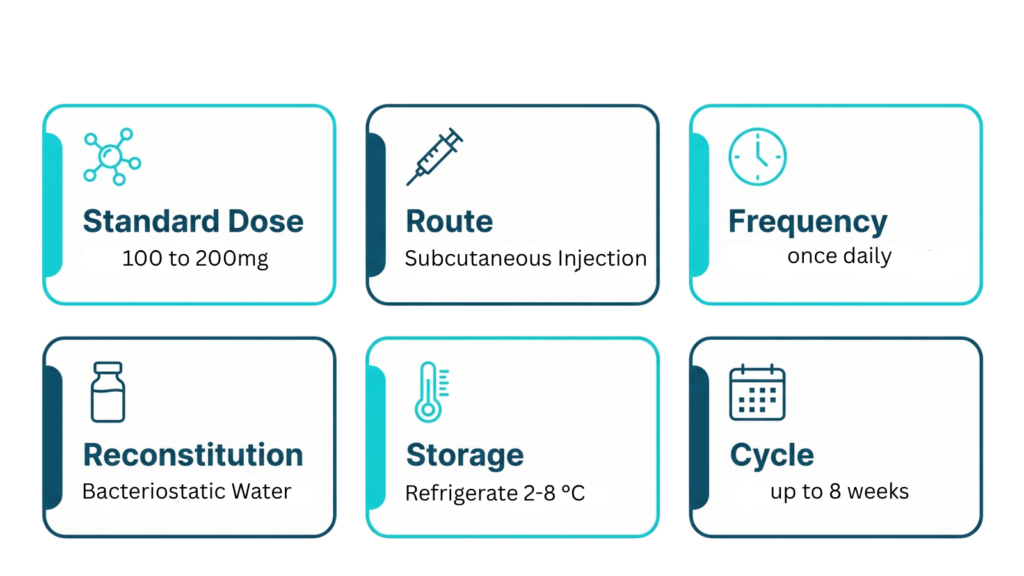
- Start with 100 mg daily during initial phase
- Increase to 150 mg, then 200 mg daily as needed
- Frequency: Once daily or every-other-day for maintenance
- Maintain consistent timing for best results
- Typical cycle: 4–8 weeks, optional break afterward
- Rotate injection sites regularly
| Week | Daily Dose (mg) | Units (U-100) | Volume (mL) |
|---|---|---|---|
| Weeks 1–2 | 100 mg | 33 units | 0.33 mL |
| Weeks 3–4 | 150 mg | 50 units | 0.50 mL |
| Weeks 5–8 | 200 mg | 67 units | 0.67 mL |
For maximum efficiency please feel free to use our free Peptide Calculator
How to Reconstitute Peptides Step by Step
- Clean the rubber stopper of your peptide vial with an alcohol swab and let it dry.
- Using a syringe, draw the calculated amount of bacteriostatic water.
- Insert the needle through the stopper and inject the water slowly down the inside wall of the vial. Do not aim directly at the powder.
- Gently swirl the vial until the powder dissolves completely. Never shake it, as this can degrade the peptide.
- Store the reconstituted vial in your refrigerator (2-8 °C). Use within 3 to 4 weeks.
Frequently Asked Questions
Q: Why is glutathione called the “Master Antioxidant”?
A: It is the most abundant intracellular thiol. It has the unique ability to regenerate other antioxidants (like Vitamin C and E) back to their active states, and it is directly involved in the detoxification of almost every chemical or metabolic byproduct the liver processes.
Q: What is the significance of the GSH:GSSG ratio?
A: It acts as a cellular “redox thermometer.” In healthy cells, the ratio of GSH to GSSG is often 100:1. As oxidative stress increases, the amount of GSSG rises, and this ratio drops. Researchers use this ratio to measure the health status of tissues.
Q: How do I improve glutathione levels for research purposes?
A: Because oral glutathione is often degraded by digestion, research frequently focuses on precursors that boost endogenous synthesis:
- N-Acetyl-Cysteine (NAC): Provides the rate-limiting cysteine precursor.
- Glycine & Glutamine: Provide the other necessary building blocks.
- Undenatured Whey Protein: High in cysteine content.
Q: Is “Skin Lightening” a primary clinical use?
A: While glutathione is widely promoted in the cosmetic industry for skin brightening (due to its inhibition of melanin synthesis), this is a secondary effect. In clinical and laboratory research, its primary focus remains redox balance, detoxification, and cellular longevity.
Sources
| Resource | Description | Link |
|---|---|---|
| PubMed | Peer-reviewed studies on redox homeostasis and GSH. | View Studies |
| PubChem | Chemical structure and property data. | View Data |
| ClinicalTrials.gov | Search for active clinical research involving GSH. | View Trials |
Our Recommended UK Supplier
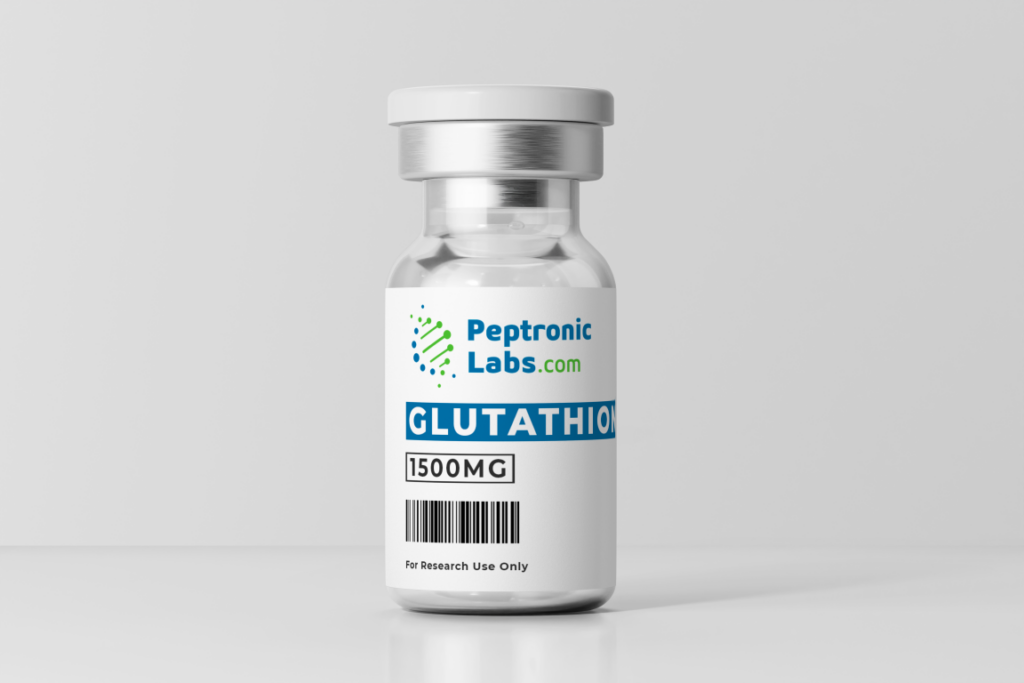
Glutathione is available from Peptronic Labs UK-based, ≥99.0% purity verified by HPLC, Royal Mail Tracked 24. View Glutathione