

5-Amino-1MQ (often abbreviated as 5-Amino) is a potent, selective, cell-permeable small-molecule inhibitor of the enzyme Nicotinamide N-methyltransferase (NNMT). While many compounds studied in this library focus on hormone signaling (like GH secretagogues or melanocortin agonists), 5-Amino-1MQ focuses on cellular metabolic regulation and the preservation of crucial intracellular cofactors.
Detailed Mechanism of Action
The scientific interest in 5-Amino-1MQ revolves entirely around the NNMT enzyme.
- The NNMT “Sink”: In many metabolic conditions, NNMT levels are elevated, particularly in adipose (fat) tissue. NNMT acts as a “sink,” consuming two vital molecules: NAD+ (Nicotinamide adenine dinucleotide) and SAM (S-adenosylmethionine).
- NAD+ Depletion: NAD+ is a fundamental co-enzyme required for mitochondrial health, DNA repair, and the activity of Sirtuins (longevity genes). When NNMT is overactive, it depletes cellular NAD+ reserves, which can impair metabolic function and energy production.
- The Inhibition Effect: 5-Amino-1MQ binds to and inhibits NNMT. By blocking this enzyme, the cell preserves its pool of NAD+.
- Metabolic Shift: Research suggests that by increasing the availability of NAD+ and preventing the methylation of nicotinamide, the compound encourages the cell to increase fatty acid oxidation (fat burning) and shift from a storage-heavy metabolic state to an energy-expenditure state.
Key Preclinical Findings
Research in preclinical models (specifically diet-induced obese mouse models) has highlighted several areas of interest for investigators:
- Lipid Metabolism: Studies have observed a reduction in fat mass and the size of adipocytes (fat cells).
- Insulin Sensitivity: Improved glucose tolerance and insulin signaling have been recorded in subjects, suggesting a potential role in ameliorating metabolic syndrome.
- Muscular Health: Emerging research has begun to look at the impact on muscle tissue, with some data suggesting improvements in grip strength and exercise endurance, potentially by improving the metabolic efficiency of muscle cells.
- Cellular “Quality Control”: By boosting NAD+, the compound is theorized to support broader cellular repair pathways that rely on NAD+-dependent enzymes.
Technical Specification Table
| Compound Profile: 5-Amino-1MQ | |
|---|---|
| Classification | Small-molecule NNMT Inhibitor |
| Primary Target | Nicotinamide N-methyltransferase (NNMT) |
| Metabolic Effect | Increased NAD+ levels, enhanced fatty acid oxidation |
| Research Context | Obesity, Diabetes, Metabolic Syndrome, Aging |
| Current Status | Preclinical (Animal/Cellular models only) |
Dosing Guidelines:
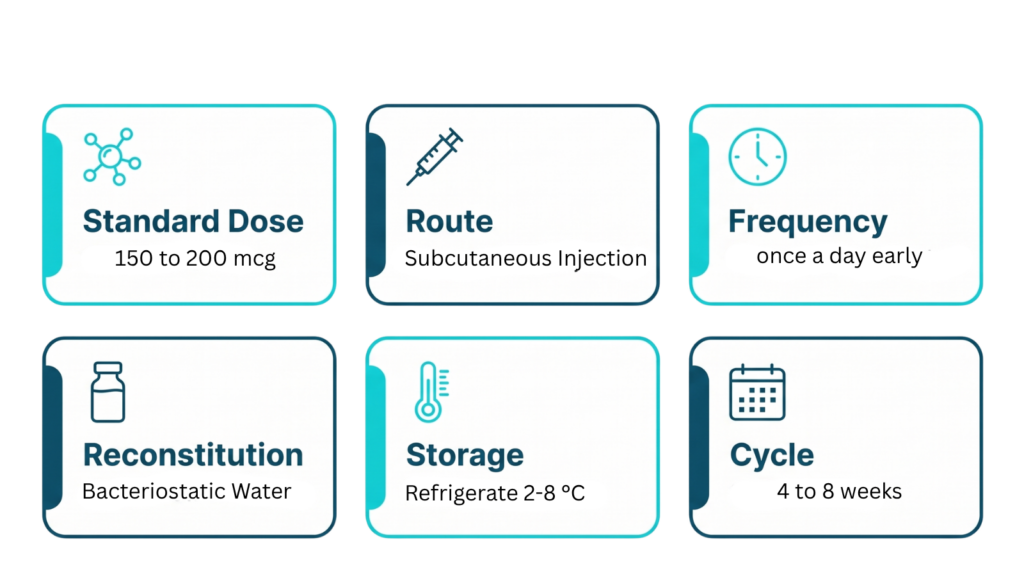
As an injectable compound, 5-Amino-1MQ dosing should be carefully considered and administered under medical supervision. While specific dosages may vary based on individual needs and responses, general guidelines suggest:
- Starting with a lower dose and gradually increasing as tolerated
- Typical dosage ranges from 150mcg per injection
- Frequency is daily, more research needs to be done to fine tune dosing
It’s crucial to consult with a healthcare professional for personalized dosing instructions and to monitor your response to the treatment.
For maximum efficiency please feel free to use our free Peptide Calculator
How to Reconstitute Peptides Step by Step
- Clean the rubber stopper of your peptide vial with an alcohol swab and let it dry.
- Using a syringe, draw the calculated amount of bacteriostatic water.
- Insert the needle through the stopper and inject the water slowly down the inside wall of the vial. Do not aim directly at the powder.
- Gently swirl the vial until the powder dissolves completely. Never shake it, as this can degrade the peptide.
- Store the reconstituted vial in your refrigerator (2-8 °C). Use within 3 to 4 weeks.
Frequently Asked Quetstions
Q: What does 5 Amino 1MQ do?
A: It is a selective small-molecule inhibitor of the NNMT enzyme, distinct from peptide-based research compounds.
Q: What is the primary mechanism of action?
A: By inhibiting the NNMT enzyme, the compound prevents the depletion of NAD+ and SAM, thereby supporting mitochondrial function and cellular metabolic efficiency.
Q: Why is it often studied in the context of fat loss?
A: Research indicates it helps shift adipose tissue metabolism toward increased fatty acid oxidation, effectively reducing fat storage capacity in preclinical models.
Q: What is the current research status?
A: It is currently strictly a preclinical research compound. No human clinical trials exist, and human safety/efficacy profiles have not been established.
Q: Are there specific storage requirements?
A: Store lyophilized powder at -20°C. Reconstituted or prepared solutions should be stored in a refrigerator (2°C–8°C) and protected from light.
Sources
| Resource | Description | Link |
|---|---|---|
| PubMed | Peer-reviewed literature on NNMT inhibition and metabolic outcomes. | View Studies |
| PubChem | Chemical structure, molecular weight, and property data. | View Data |
| ClinicalTrials.gov | Search for active or historical human study records. | View Trials |
Our Recommended UK Supplier
5 amino 1mq is available from Peptronic Labs UK-based, ≥99.0% purity verified by HPLC, Royal Mail Tracked 24.Veiw 5-Amino-1MQ