
Overview of Retatrutide
Retatrutide is a synthetic peptide engineered to act as an agonist at three distinct receptors:
- GLP-1 (Glucagon-like peptide-1)
- GIP (Glucose-dependent insulinotropic polypeptide)
- Glucagon receptor
By stimulating these three pathways simultaneously, researchers are investigating its potential to provide a synergistic effect on glucose regulation and lipid metabolism, which is significantly more comprehensive than single or dual-agonist therapies.
| Parameter | Specification |
|---|---|
| Peptide Name | Retatrutide (LY3437943) |
| Classification | Triple Agonist (GIP/GLP-1/Glucagon) |
| Molecular Weight | ~4733.3 g/mol |
| Administration | Subcutaneous Injection |
| Primary Research Focus | Obesity, NAFLD, Metabolic Syndrome |
Mechanism of Action
The “Triple G” approach is the core of Retatrutide’s research interest:
- GLP-1 Stimulation: Primarily regulates insulin secretion, delays gastric emptying, and promotes satiety by signaling the brain to reduce appetite.
- GIP Stimulation: Enhances the glucose-lowering effects of GLP-1 and helps regulate lipid metabolism in adipose tissue.
- Glucagon Receptor Agonism: This is the unique differentiator. While glucagon usually raises blood sugar, in the context of this triple-agonist structure, it is theorized to increase energy expenditure and fat oxidation, potentially offsetting the “plateau” effect seen in weight-loss research.
| Peptide | Formula | Molecular Weight |
|---|---|---|
| Retatrutide (LY3437943) | C161H235N37O46 | ~4733.3 g/mol |
1. Research Summary: The “Triple G” Agonist
Retatrutide is currently a major focus in metabolic research due to its unique “triple agonist” mechanism. Unlike previous weight-management peptides that targeted one or two receptors, Retatrutide is engineered to interact with the three primary metabolic regulators simultaneously.
- Synergistic Regulation: By activating GLP-1, GIP, and Glucagon receptors, Retatrutide mimics the body’s natural metabolic signaling more holistically than single-hormone treatments.
- Energy Expenditure: One of the most studied aspects of Retatrutide is its potential to increase energy expenditure (thermogenesis) via the glucagon receptor agonism. While glucagon typically raises blood sugar, in this synthetic peptide structure, it is balanced by the GLP-1/GIP effects to focus on fat oxidation and metabolic rate.
- Metabolic Homeostasis: Research models suggest weightloss drug helped people lose 28 percent of body weight, This triple-action creates a more robust “switch” for the body to move from glucose reliance to fat utilization, which is the primary area of interest for studies involving obesity and non-alcoholic fatty liver disease (NAFLD).
2. Stability and Storage Specifications
Because Retatrutide is a complex peptide, maintaining its integrity is critical for research accuracy. Use the table below for your documentation.
| Condition | Temperature Requirements |
|---|---|
| Lyophilized (Powder) | Store at -20°C for long-term stability. Avoid repeated freeze-thaw cycles. |
| Reconstituted (Liquid) | Store at 2°C to 8°C (Refrigerated). Use within 14 days for optimal efficacy. |
| Sensitivity | Highly sensitive to heat and direct UV light; keep in original vial. |
Clinical Titration Protocol Overview
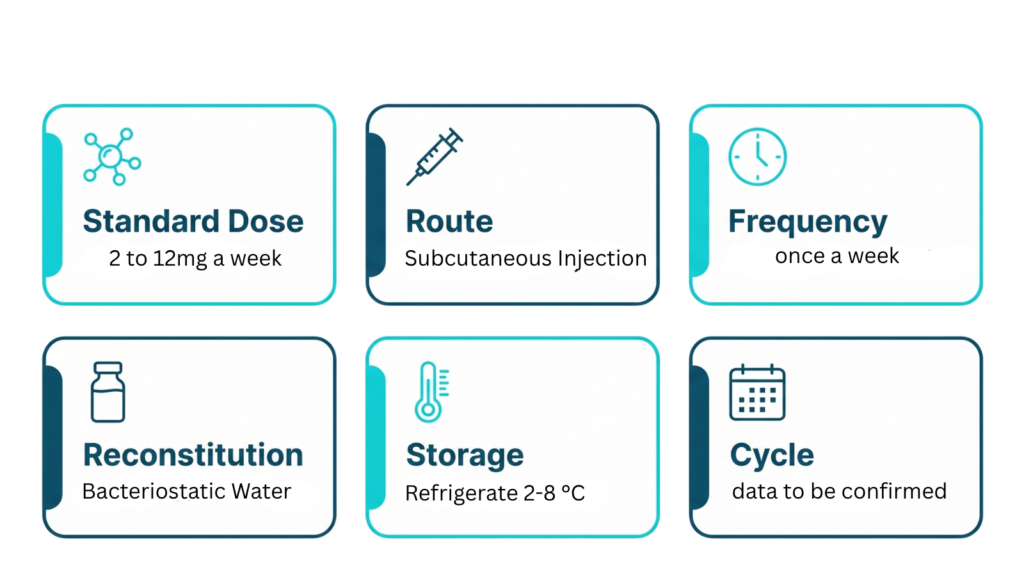
In Eli Lilly’s research, the administration was subcutaneous, once weekly. The dosage escalation was structured to move subjects from a baseline dose to the target therapeutic dose over several weeks.
- Start Dose: Research retatrutide with a clinical trial models typically initiated at a low dose (e.g., 2 mg) to assess baseline response and side-effect profiles.
- Titration Period: The dose was incrementally increased at 4-week intervals.
- Max Dosage: In Phase 2 trials, researchers investigated dosages ranging up to 12 mg.
Important Research Note: The clinical purpose of this titration is to mitigate the common gastrointestinal side effects (nausea, emesis, diarrhea) often associated with potent GLP-1/GIP receptor stimulation.
| Research Phase | Dose Frequency | Dose (Examples) |
|---|---|---|
| Initial Phase | Once Weekly | 2 mg |
| Escalation (4-8 weeks) | Once Weekly | 4 mg – 8 mg |
| Maintenance/High Dose | Once Weekly | 12 mg |
For maximum efficiency please feel free to use our free Peptide Calculator
How to Reconstitute Peptides Step by Step
- Clean the rubber stopper of your peptide vial with an alcohol swab and let it dry.
- Using a syringe, draw the calculated amount of bacteriostatic water.
- Insert the needle through the stopper and inject the water slowly down the inside wall of the vial. Do not aim directly at the powder.
- Gently swirl the vial until the powder dissolves completely. Never shake it, as this can degrade the peptide.
- Store the reconstituted vial in your refrigerator (2-8 °C). Use within 3 to 4 weeks.
External sources
The following resources represent the foundational clinical data for Retatrutide (LY3437943). The Phase 2 study published in the New England Journal of Medicine first established the triple-agonist efficacy regarding weight reduction, while the recent Phase 3 TRANSCEND-T2D-1 trial in The Lancet provides critical data on glycaemic control in type 2 diabetes populations. These peer-reviewed documents are recommended for researchers seeking to understand the mechanism of action, dose-escalation safety profiles, and long-term metabolic outcomes associated with this molecule
Frequently Asked Questions: Retatrutide (LY3437943)
Q: What makes Retatrutide a “triple agonist”?
A: Retatrutide is designed to simultaneously stimulate three specific receptors: the glucagon receptor (GCGR), the glucose-dependent insulinotropic polypeptide (GIP) receptor, and the glucagon-like peptide-1 (GLP-1) receptor. Researchers study this triple-action mechanism because it is hypothesized to provide a more comprehensive metabolic impact than single or dual-agonist compounds.
Q: How does its mechanism of action differ from previous compounds?
A: While compounds like Semaglutide act solely on the GLP-1 receptor and Tirzepatide acts on both GLP-1 and GIP, Retatrutide adds the glucagon receptor component. The glucagon agonism is particularly interesting to researchers because it may enhance lipid metabolism (fat burning) and energy expenditure, potentially leading to more pronounced weight reduction in experimental models.
Q: What do current Phase 2 and 3 study results suggest?
A: Clinical data published in the New England Journal of Medicine and The Lancet (from the TRANSCEND-T2D-1 trials) have demonstrated significant outcomes in both weight reduction and glycemic control in participants with type 2 diabetes and obesity. Researchers are focusing on these data points to understand the dose-escalation safety profiles and the sustained metabolic improvements associated with the compound.
Q: Are there specific storage requirements for research?
A: Retatrutide is a peptide-based compound and is highly sensitive to environmental factors.
- Lyophilized Powder: Store in a freezer at -20°C for long-term stability.
- Reconstituted Solution: Should be kept refrigerated (2°C to 8°C) and used promptly according to your specific research protocol.
- Stability: Avoid agitation (shaking) during reconstitution, as the molecular structure can be delicate.
Sources
| Source | Study/Document Title | External Link |
|---|---|---|
| NEJM | Triple–Hormone-Receptor Agonist Retatrutide for Obesity (Phase 2) | View Study |
| The Lancet | Efficacy and safety of retatrutide in T2D (TRANSCEND-T2D-1 Phase 3) | View Study |
| Eli Lilly | Official Corporate Clinical Trial Newsroom | View Newsroom |
| Wikipedia | Retatrutide Technical & Development Overview | View Wiki |
Our Recommended UK Supplier
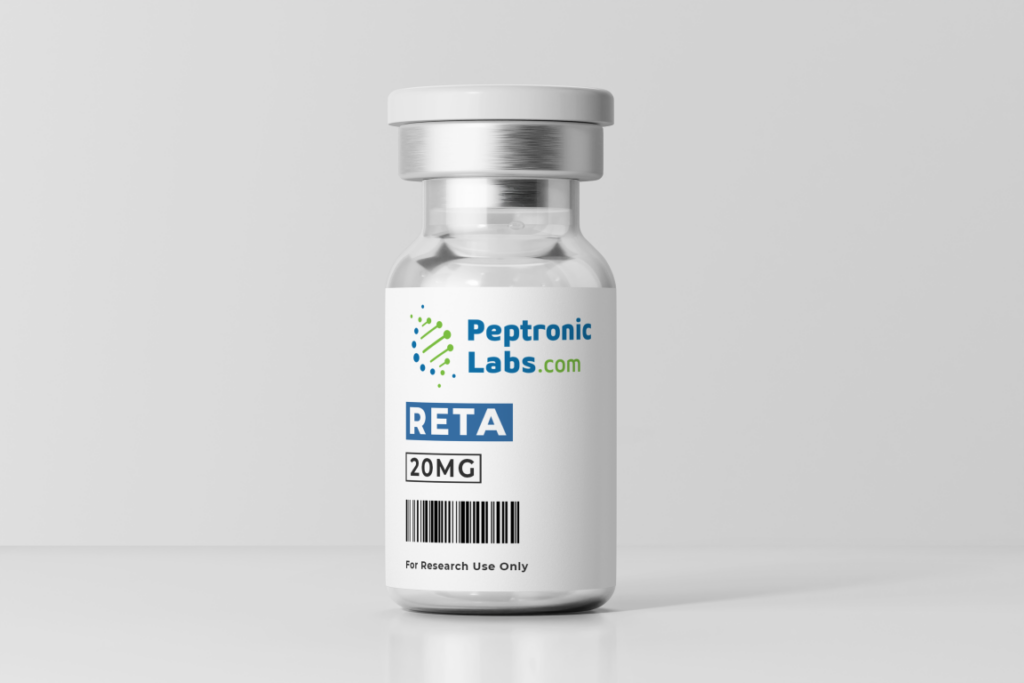
Retatrutide is available from Peptronic Labs UK-based, ≥99.0% purity verified by HPLC, Royal Mail Tracked 24. view Retatrutide