
Overview of AOD-9604
AOD-9604 (Anti-Obesity Drug-9604) is a synthetic analog of a small fragment of the human growth hormone (hGH). Specifically, it is a 16-amino acid peptide derived from the C-terminal end of the hGH molecule (amino acids 177–191).
It was originally developed as a potential therapeutic agent for obesity, designed to retain the fat-metabolizing properties of human growth hormone without triggering the systemic growth-promoting or blood-sugar-altering effects associated with the full-length hormone.
Mechanism of Action
The primary interest in AOD-9604 centers on its role in lipid (fat) metabolism. Unlike full-length hGH, which acts through the growth hormone receptor and stimulates the production of IGF-1 (insulin-like growth factor 1), AOD-9604 is believed to operate through distinct pathways:
- Stimulation of Lipolysis: Research indicates that the peptide may stimulate the breakdown of stored fat cells into free fatty acids and glycerol.
- Inhibition of Lipogenesis: It is theorized to inhibit lipogenesis, the process by which the body creates and stores new fat from excess calories.
- Adrenergic Modulation: Some studies suggest that AOD-9604 may enhance lipolysis by upregulating or interacting with beta-3 adrenergic receptors, which are involved in the body’s thermogenic and fat-mobilizing processes.
Development and Clinical History
AOD-9604 underwent clinical testing during the 2000s, primarily aimed at treating obesity.
- Clinical Trials: Several randomized, double-blind, placebo-controlled human trials were conducted. These studies suggested that the peptide was generally well-tolerated and did not demonstrate the adverse metabolic effects commonly linked to full-length hGH, such as increased IGF-1 levels, impaired glucose tolerance, or insulin resistance.
- Status: Despite positive safety and tolerability data, the development of AOD-9604 as a pharmaceutical drug for obesity was discontinued by the original developer after later trials failed to demonstrate the level of significant weight loss required for commercial viability as an anti-obesity medication.
Regulatory and Safety Status
It is critical to note the following regarding the current status of AOD-9604:
- Not FDA Approved: AOD-9604 is not approved by the U.S. Food and Drug Administration (FDA) or similar regulatory bodies for the treatment of any medical condition.
- “Research Chemical” Classification: It is widely distributed online as a “research chemical.” These products are often sold for laboratory research purposes and are not manufactured under the stringent GMP (Good Manufacturing Practice) standards required for human therapeutic medications. Consequently, there is no guarantee of purity, potency, or sterility.
- WADA Prohibited List: The World Anti-Doping Agency (WADA) classifies AOD-9604 as a prohibited substance under the “S0. Non-approved substances” category, meaning it is banned for use in competitive sports.
- Safety Considerations: While human trials from the mid-2000s reported a favorable short-term safety profile, there is a lack of long-term data regarding its use. Potential side effects reported in anecdotal and limited clinical observations include mild fatigue, headaches, and localized irritation at the site of injection.
Summary for Research Context
AOD-9604 is a subject of ongoing interest in biochemical research due to its ability to modulate metabolic pathways without the systemic hormonal impact of growth hormone. However, because it lacks regulatory approval and standardized manufacturing, any application outside of controlled, institutional research settings carries significant risks regarding product quality and safety.
Disclaimer: This information is provided for educational and research purposes only. It does not constitute medical advice, diagnosis, or treatment. Always seek the advice of a physician or other qualified health provider with any questions regarding a medical condition or therapeutic intervention.
| Technical Specifications: AOD-9604 | |
|---|---|
| Peptide Name | AOD-9604 (Anti-Obesity Drug) |
| CAS Number | 221231-10-3 |
| Amino Acid Sequence | Tyr-Leu-Arg-Ile-Val-Gln-Cys-Arg-Ser-Val-Glu-Gly-Ser-Cys-Gly-Phe |
| Molecular Formula | C78H125N23O23S2 |
| Molecular Weight | ~1817.1 g/mol |
AOD-9604 Dosage Information
Dosages
AOD-9604 is a peptide fragment derived from human growth hormone, often used for fat loss and metabolic enhancement. Dosage recommendations may vary depending on individual goals and health conditions. Below are general guidelines:
- Typical Dosage Range:
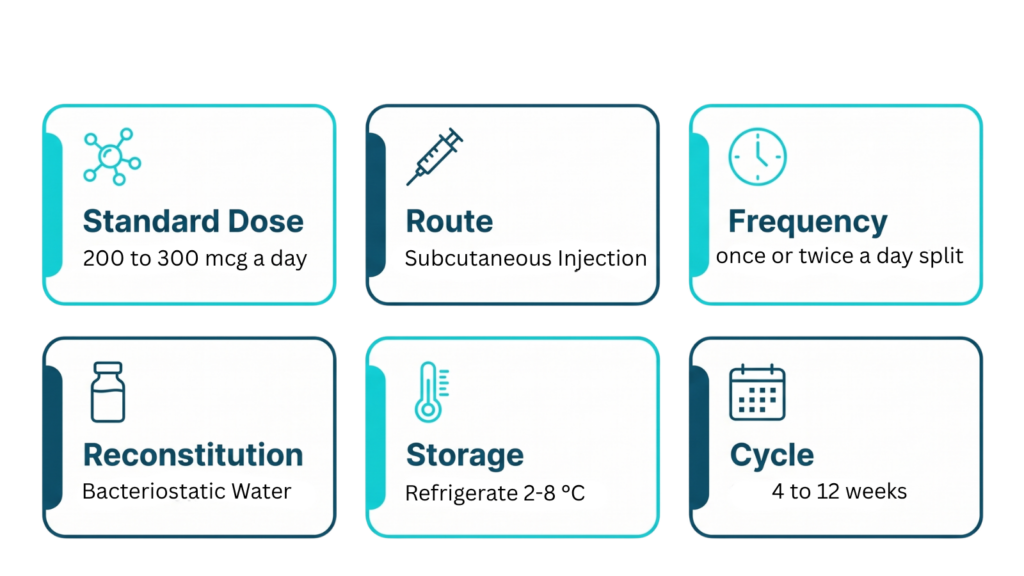
- 200 to 300 micrograms (mcg) per day.
- Administration:
- Usually administered via subcutaneous injection.
- Can be taken once daily or split into two doses (morning and evening).
- Cycle Length:
- Common cycles last from 4 to 12 weeks.
- Some users take breaks between cycles to maintain effectiveness.
- Starting Dosage:
- It is advisable to start at the lower end (around 200 mcg) to assess tolerance.
- Safety:
- Monitor for any adverse effects.
For maximum efficiency please feel free to use our free Peptide Calculator
How to Reconstitute Peptides Step by Step
- Clean the rubber stopper of your peptide vial with an alcohol swab and let it dry.
- Using a syringe, draw the calculated amount of bacteriostatic water.
- Insert the needle through the stopper and inject the water slowly down the inside wall of the vial. Do not aim directly at the powder.
- Gently swirl the vial until the powder dissolves completely. Never shake it, as this can degrade the peptide.
- Store the reconstituted vial in your refrigerator (2-8 °C). Use within 3 to 4 weeks.
Frequently Asked Questions: AOD-9604
Q: What is the primary mechanism of AOD-9604 in research?
A: AOD-9604 is studied for its ability to mimic the lipolytic (fat-burning) domain of growth hormone without the systemic growth-promoting effects. Research indicates it may promote lipolysis (the breakdown of stored fat) and inhibit lipogenesis (the formation of new fat) by interacting with metabolic pathways in adipose tissue.
Q: How does it differ from human growth hormone (hGH)?
A: Unlike full-length hGH, AOD-9604 does not stimulate the production of insulin-like growth factor-1 (IGF-1) or negatively affect blood glucose and insulin levels. It is essentially a truncated fragment designed specifically to isolate the metabolic effects of hGH while excluding its growth and insulin-antagonizing properties.
Q: What has the clinical research shown regarding weight loss?
A: While preclinical animal studies showed significant reductions in body weight and fat mass, human clinical trials have yielded mixed results. A major 24-week Phase 2b clinical trial, which led to the termination of its development as a pharmaceutical drug in 2007, failed to show significant weight loss compared to a placebo.
Q: How is AOD-9604 stored in a laboratory setting?
A: Similar to other peptides, AOD-9604 is temperature-sensitive. Lyophilized powder should be stored in a freezer at -20°C for long-term stability. Once reconstituted with bacteriostatic water, it should be kept in a refrigerated environment (2°C to 8°C) and protected from light to maintain peptide integrity.
Technical Specifications & References
| Source | Description | Link |
|---|---|---|
| PubMed | Peer-reviewed research and clinical study archives. | View Studies |
| PubChem | Chemical structure and molecular data for AOD-9604. | View Data |
| ClinicalTrials.gov | Historical trial data and study records. | View Trials |
Our Recommended UK Supplier
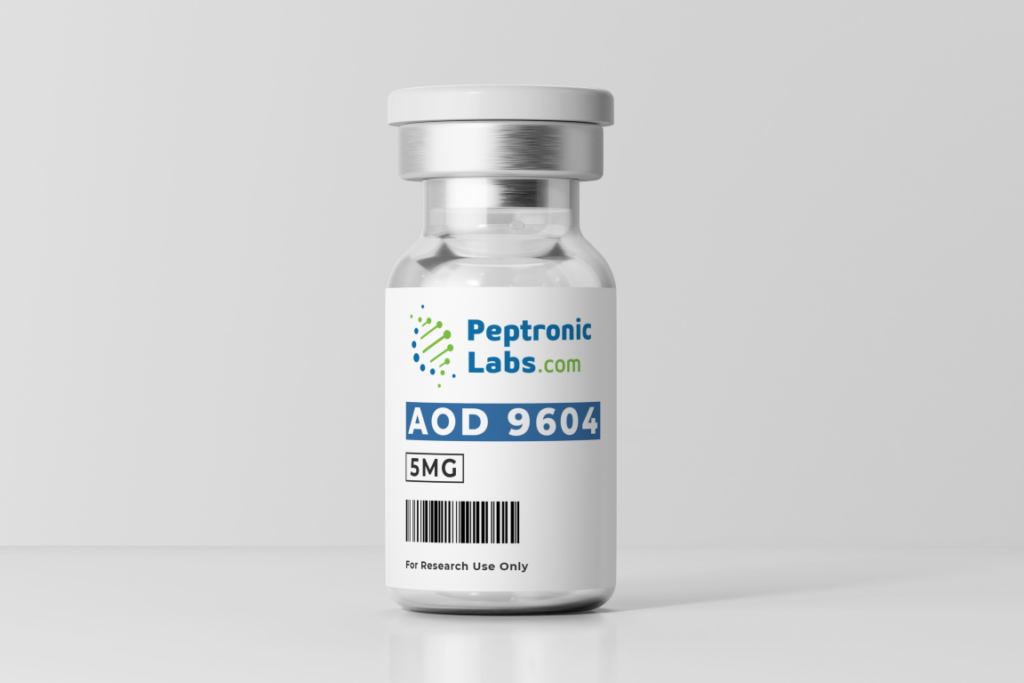
OAD 9064 is available from Peptronic Labs UK-based, ≥99.0% purity verified by HPLC, Royal Mail Tracked 24. View AOD 9064
Important Notice: All content on this page is for laboratory research and educational purposes only. Not intended as medical advice or for human consumption.